When golfers struggle, the instinct is almost always technical.
Change the grip.
Fix the swing.
Add another drill.
But most improvement problems aren’t technical.
They’re environmental.
One of the strongest predictors of whether someone continues in golf isn’t talent.
It’s early success.
If someone feels incapable early on, they don’t persist.
If they experience small, visible wins, they stay.
Confidence follows competence.
And competence comes from interacting successfully with the task in front of you.
That’s why environment matters.
Why We Start Closer to the Hole
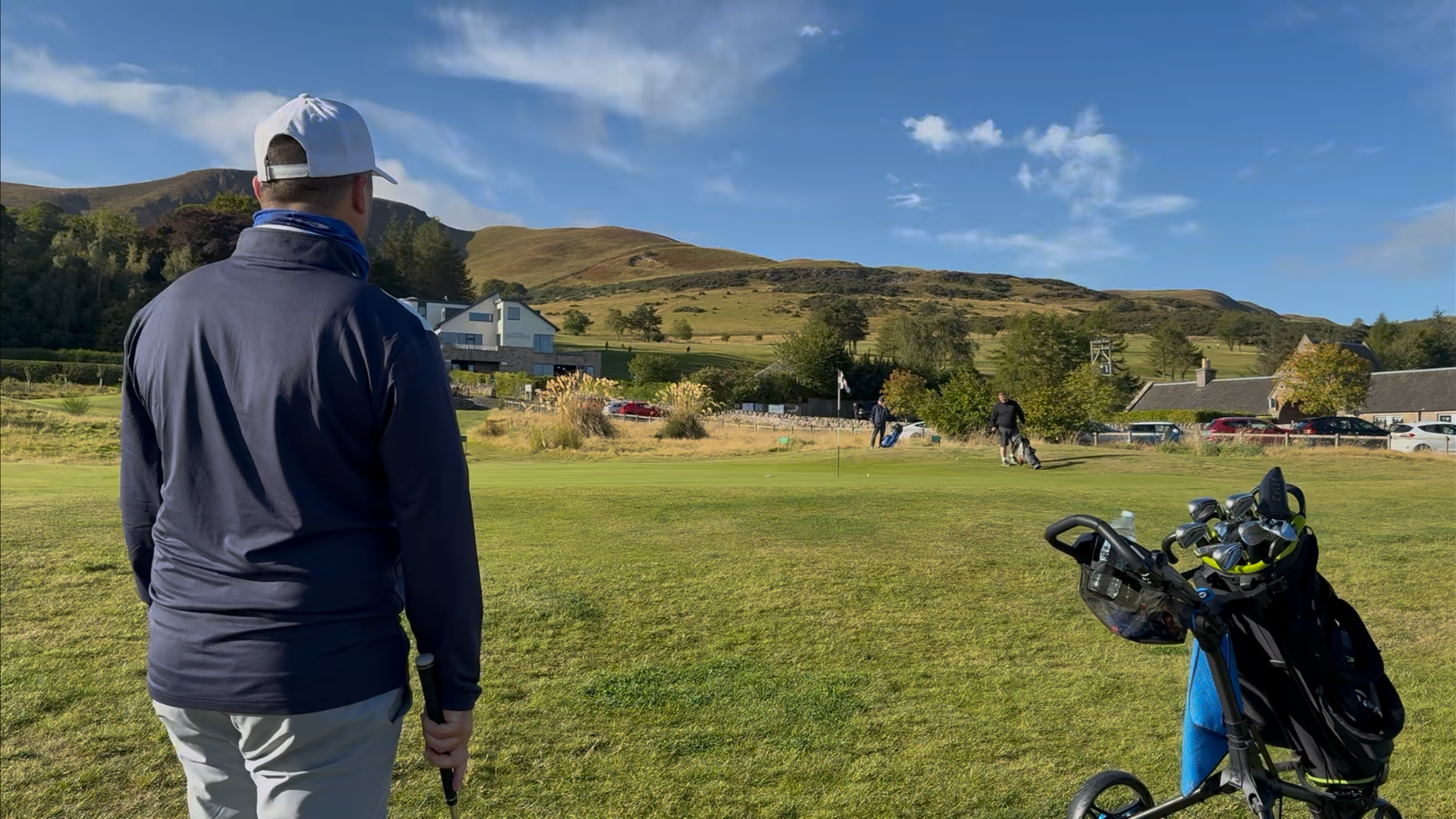
On our Par 3 course at Swanston in Edinburgh, beginners don’t begin 180 yards away hoping for miracles.
They start on the green.
Or from 25 yards out.
They earn the right to move further back.
Instead of triple bogeys and no returns, they see:
Pars.
Birdies.
Even the occasional eagle.
Early on.
That matters.
Over the last two years, more than 150 beginners have entered the game through our Play 9 – Score 36 events.
They aren’t grinding technique.
They’re learning through play.
And when someone can see progress on a scorecard, it becomes real.
That early success builds momentum.
For anyone exploring beginner golf improvement, this is often the missing piece. Not more advice — but the right starting point.
Change the Task, Change the Behaviour
Skill improves when the task demands it.
If the task is too hard, people disengage.
If it’s too easy, they don’t grow.
Our job as coaches isn’t just to explain.
It’s to shape the environment.
For beginners, we reduce distance and complexity.
For improving players, we narrow focus.
For better players, we increase challenge.
That might mean:
Playing from tougher lies
Adding scoring pressure
Setting constraints
Tracking performance honestly
Better players don’t need comfort.
They need the right level of difficulty.
Change the task, and behaviour adjusts.
Over time, skill follows.
This is how golf practice habits become productive rather than reactive. The environment guides the behaviour before the swing changes.
Built Intentionally
Golf can feel overwhelming.
Long holes.
Too much information.
Unclear progress.
When someone feels behind before they begin, they drift away.
So Swanston has been built deliberately.
Family-friendly.
Accessible.
Structured.
A place where:
Beginners feel safe
Juniors see a pathway
Parents understand the journey
Better players are stretched properly
Environment isn’t decoration.
It’s the foundation of a real golf improvement plan.
The Bigger Picture
Every golfer here follows the same structure:
Assessment → Plan → Progress
But that structure only works when the environment supports it.
Create early success.
Increase challenge gradually.
Make progress visible.
That’s how participation becomes persistence.
And persistence is where real improvement lives.
If you’ve ever felt like you were trying hard but not moving forward, it’s rarely about effort.
It’s about whether the environment is helping you succeed — or quietly working against you.
That’s what we design for.
If you’re considering your next step and want clarity on how to align your golf goals with the right structure, begin with a calm starting point.
A New Client Assessment is designed to give you direction before change — and a plan that makes sense.
This blog post forms part of our Academy notes — a public record of how we think about coaching, structure, and long-term improvement.