Rory McIlroy’s Secret – Why Changing Par is the Key to Learning Golf Faster
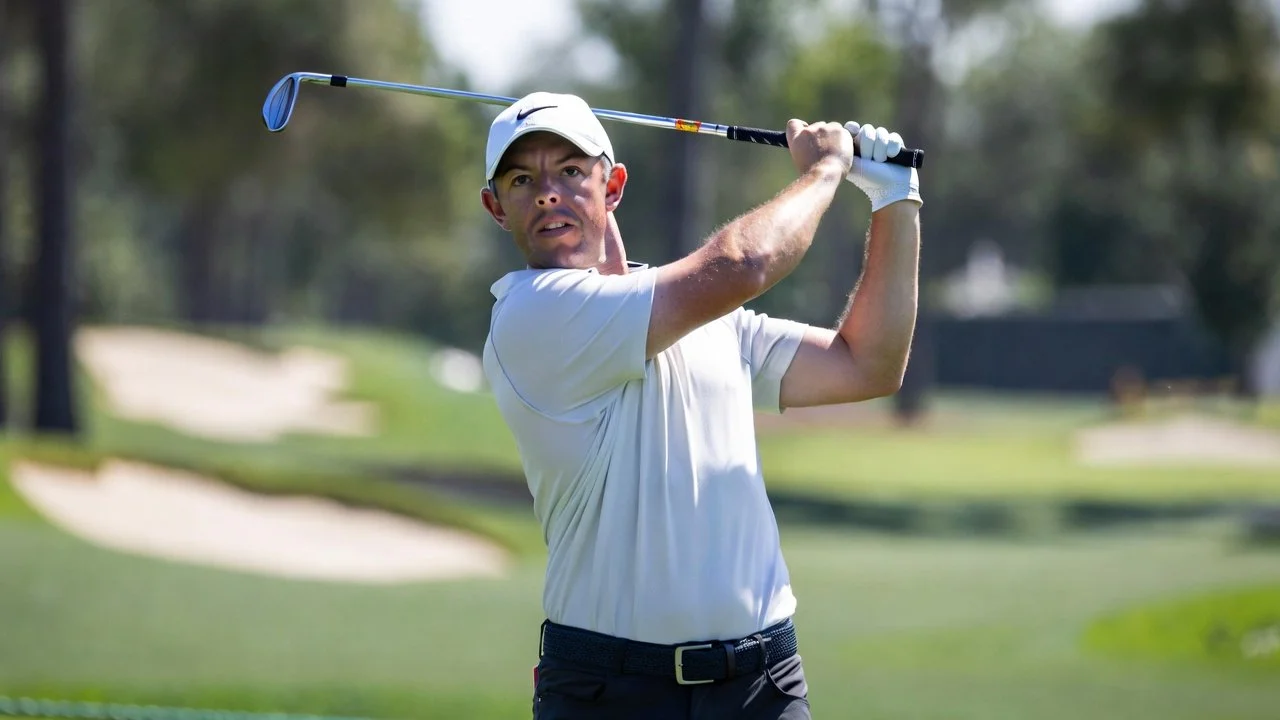
This morning, Rory McIlroy is leading The Masters by six shots.
Augusta National. The most famous golf course in the world.
Whether you follow golf closely or just catch the headlines, you can feel it. Something special is happening this week.
And watching it unfold, I keep thinking about something I saw in the Rory McIlroy documentary on Amazon Prime this week. A moment that has nothing to do with Augusta, and everything to do with why we do things differently at Swanston Golf Academy.
The moment that stopped me
The documentary follows Rory's journey — his early life in Holywood, County Down, his father Gerry's obsession with the game, and the beginning of what would become one of golf's greatest careers.
There is a moment where Gerry talks about how he introduced a young Rory to golf. He didn't hand him a driver. He didn't take him to a range and tell him to work on his swing. He didn't set him up against a standard scorecard and watch him fail.
He designed a par for Rory.
A personal par. Built around where Rory was actually starting from — not where the course expected him to be. A target that was genuinely achievable for a small child with a plastic set of clubs and a father who believed in him.
The idea was simple: give the game a score that makes sense. Build success in from the very beginning. Let confidence come before complexity.
“Start close to the hole. Build success early. Let the game grow around the player — not the other way around.”
— The principle behind every great beginner golf programme
I sat up when I heard it. Because it is exactly what Peter Arnott taught me when I first arrived at Swanston Golf Academy. And it is exactly what Earl Woods did for Tiger.
Tiger's dad figured it out too
Tiger Woods began his golf journey not on a course, not on a range, but in the family garage — watching his father Earl hit balls into a net while Tiger sat in his highchair. From the earliest age, Tiger was introduced to the game through feel, through watching, through being close to it.
When Tiger eventually started playing, Earl didn't march him to the back tee and tell him to keep up. He built the experience around where Tiger was. He let success come first. He let the game be enjoyable before it became demanding.
The result? The greatest golfer who ever lived. A player whose short game — built from those earliest days close to the hole — remains the gold standard in professional golf.
Two fathers. Two future legends. The same instinct: design the game around the beginner, not the other way around.
What Peter Arnott taught me
When I joined Swanston Golf Academy, I had the privilege of working alongside Peter Arnott — one of the most respected coaches in Scottish golf. The first thing Peter shared with me was something he called the “green-back approach.”
The principle was straightforward: beginners should start as close to the hole as possible and work backwards. Start on the putting green. Move to chipping. Then pitching. Then longer and longer shots — progressively, as confidence and skill develop.
Don't start at the beginning. Start at the end, and work your way back.
It sounded simple. But the more I coached, the more I understood just how radical it was — and how completely the traditional approach to teaching golf ignores it.
Seven out of ten people who try golf give up. Not because the game is too hard. Because we put them on a driving range, hand them a driver, and tell them the slice will fix itself eventually. It doesn't. They leave.
The problem with par 3
At Swanston, we have a par 3 course. The Templar Course. It's a wonderful facility — nine holes, beautifully maintained, perfectly designed for shorter shots and beginner golfers.
But here's what we discovered: if you put a true beginner on a par 3 course and tell them par is 3, you are setting them up to fail.
A true beginner cannot reliably get the ball in the hole in three shots. Not yet. And when they take five, six, seven shots on a hole where par is three — what happens? The score looks disastrous. The gap between where they are and where they're supposed to be feels enormous. The joy drains out of it.
Sound familiar? It's the driving range problem in a different form. The standard has been imposed on the player, rather than built around them.
So we asked a simple question: what if we changed par?
Why we set par at 4 — and what 36 means
For beginners at our Play 9 — Score 36 events, we don't use par 3. We set par at 4 per hole. Nine holes. Par 36.
That one change transforms everything.
A beginner playing from 25 yards — Level 1 in our score 36 level system — has a genuine chance of making par. They can take a chip, a couple of putts, and walk off the green with a 3. A birdie. On a real golf course, with a real scorecard, against a real target.
The goal is simple: play 9 holes and score 36 or better. That is par. That is the challenge. And when a beginner achieves it for the first time — when they look down at a scorecard and see that they have shot par — something changes in them.
It's the same instinct Gerry McIlroy had when he set a personal par for a young Rory in Holywood. It's the same instinct Earl Woods had in that family garage. Build success in from the start. Give the game a score that makes sense at every level. Let confidence come before complexity.
The level system grows with the player. Level 1 plays from 25 yards. Level 2 from 50. Level 3 from 100. All the way to Level 6 — the full tee box, the full course, the real game. But the par stays the same: 36. And so does the challenge: beat it.
What Rory's story reminds us
Rory McIlroy is 35 years old. He has won four majors. He is, right now, playing some of the finest golf of his life on the grandest stage in the sport.
And it started with a father who understood something fundamental: the game has to meet the beginner where they are. Not where the scorecard says they should be.
That is what Play 9 — Score 36 is built on. That is what Operation 36 has built into every level of its platform. And that is why, when Rory said Operation 36 is the perfect way to introduce beginners to golf, we felt it in our bones.
“It’s the perfect way to introduce beginners to golf.”
— Rory McIlroy, on Operation 36
He knows. Because someone did it for him first.
The 2026 season starts next Saturday
Play 9 — Score 36 Event 1 — the season opener — takes place on Saturday 18th April at Swanston Golf Club. Families, adult beginners, junior beginners and experienced players are all welcome. Shotgun start from 8:00am.
There are 17 spots remaining. Entry is £15 and covers your green fee, a coaching tip on the first hole from a PGA Professional, and access to the Op36 app.
If this weekend has made you want to pick up a club — or if you’ve been thinking about it for a while and just need a reason — this is yours.